

Cloud Cost Optimization

Optimize Your Cloud,
Maximize Your Savings!

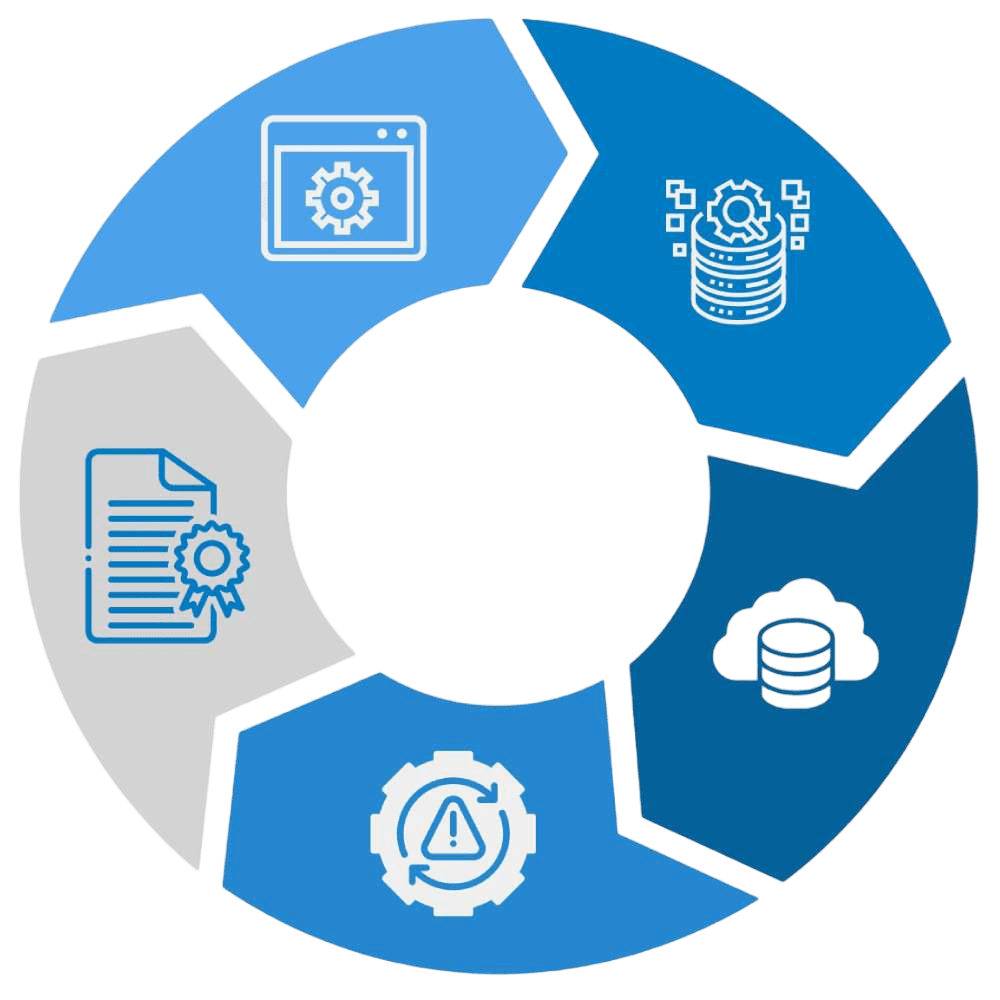
Business Challenges

1.

Lack of Compute Optimization

A significant barrier to effective infrastructure cost optimization, nearly 44% of compute spend is directed toward non-production environments. These resources often remain idle for up to 76% of the time outside a typical 40-hour workweek, leading to massive inefficiencies in cloud consumption.

2.

Lack of Database Optimization

Choosing the wrong cloud-native database solution can lead to inflated costs. Without proper cloud cost optimizationstrategies, organizations risk overpaying for underutilized or misaligned database services that don’t meet performance needs efficiently.

3.

Lack of Data Storage Optimization

Around 15% of a customer’s cloud bill typically goes to storage, with approximately 35% of that tied to unattached volumes and snapshots. This results in billions lost annually—an issue that highlights the urgent need for multi-cloud cost optimization strategies focused on identifying and eliminating orphaned storage resources.

4.

Legacy Inefficient Architecture

Outdated application stacks and legacy cloud architectures hinder agility, scalability, and innovation. Without targeted infrastructure cost optimization, such environments continue to incur high costs while delivering subpar performance and flexibility.

5.

Licensing and SaaS Management Challenges 

Many enterprises struggle to manage SaaS and software licenses effectively. With up to 24% of licenses going unused and shelfware issues escalating, it’s clear that improved cloud cost optimizationpractices—especially in licensing and subscription management—are essential to avoid unexpected expenses.

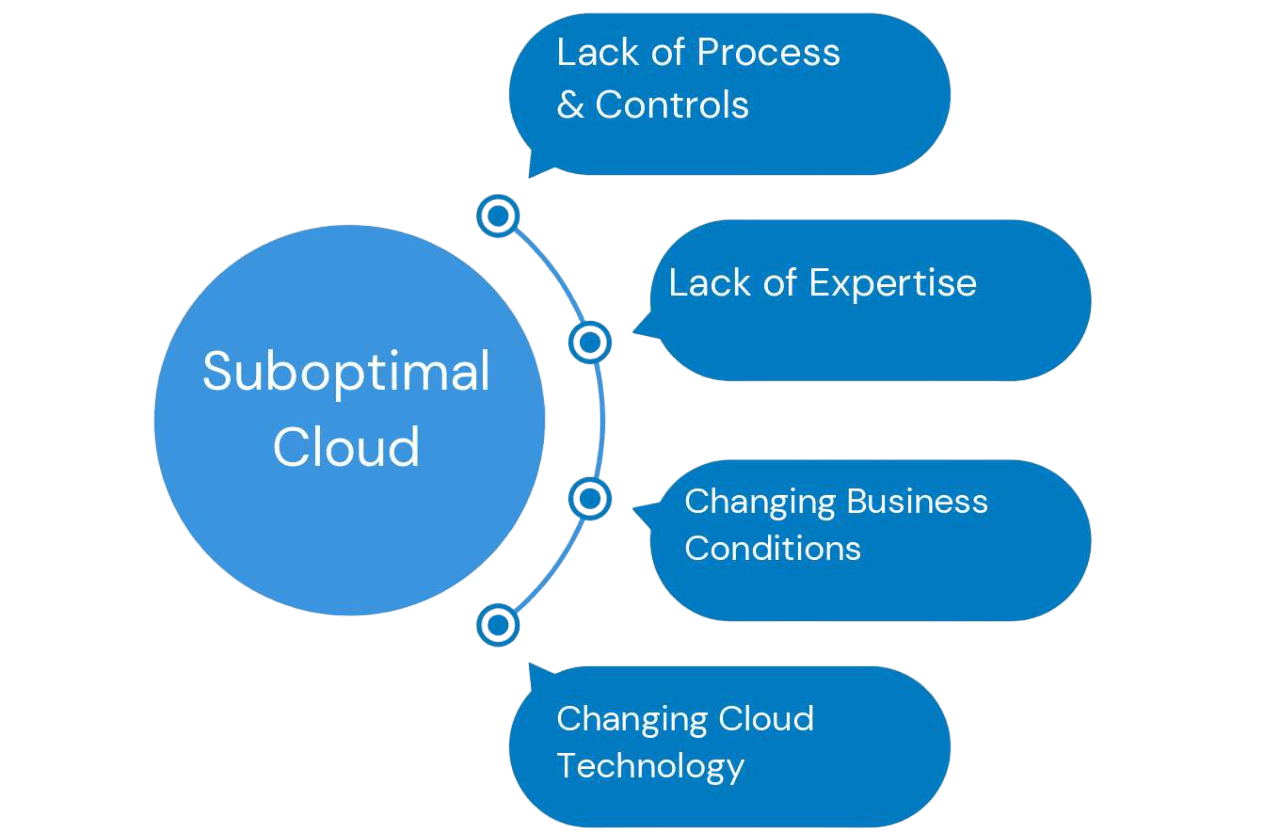
Because of Suboptimal Cloud

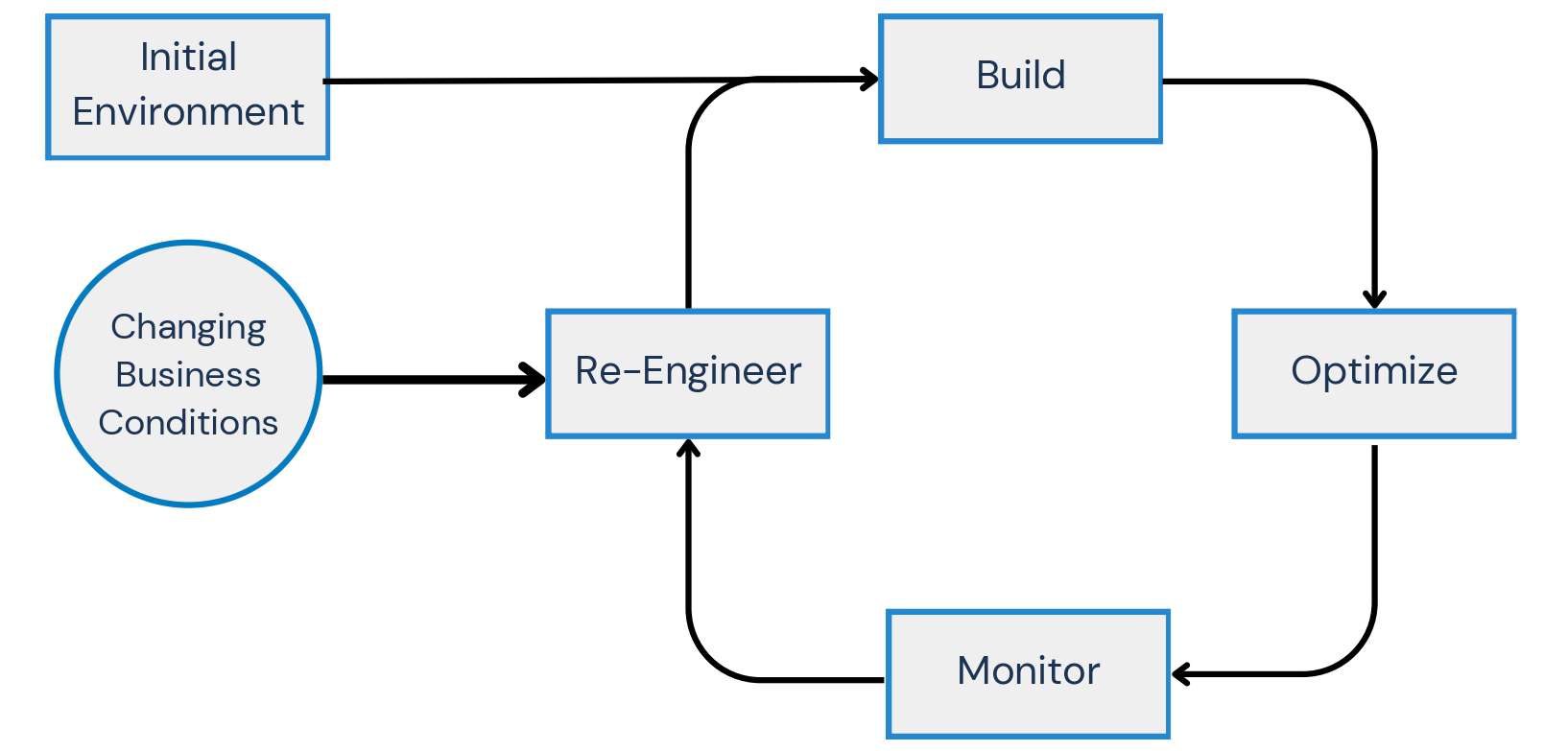
Factors like inadequate processes, limited expertise, shifting business conditions, and the constant changes in business environment can create a less-than-ideal cloud setup. This might mean using too many resources without getting enough value or using too few resources and missing out on cloud benefits. The right approach involves continuously overseeing and managing costs to ensure they stay in check.

Controlling Cloud Cost..

is a continuous Process, Not a one time task

Actual Examples

Manufacturing Company

01

Main Challenge: Insufficient Resource Provisioning

The client faced multiple infrastructure inefficiencies:

  • Over-provisioned virtual machines for handling peak workloads 
  • Lack of visibility into unused or idle resources 
  • Ignoring cost-effective compute options 
  • Absence of automation for scaling 

These issues are common among mid-sized enterprises seeking cost optimization tips for small and mid-sized businesses and looking to reduce cloud infrastructure costs without compromising performance.

02

Before Optimization 

The client maintained extra VMs to handle unpredictable workload spikes, resulting in overspending. Cloud9 performed an in-depth assessment and implemented one of the best cost optimization strategies for cloud services—tailoring compute usage to match both anticipated and unexpected workload patterns. 

03

After Optimization 

To deliver reduced cloud spending without performance loss, Cloud9 transitioned key workloads to Azure Functions for event-driven tasks. This serverless architecture enabled automatic scaling based on actual demand, ensuring resources were only used when required. Provisioning delays were eliminated, and unnecessary compute spend was cut significantly.

04

Savings Achieved 

Through strategic changes and automation, the client realized a 41% reduction in Azure Virtual Machine costs, showcasing a practical example of how to reduce cloud infrastructure costs in a production-heavy environment.

Large Bank

01

Main Idea

  • Not Leveraging right AZ SQL Database, staying with SQL VM 

02

Before

  • Customer upgraded to expensive Azure VM databases for compliance and business needs, potentially quadrupling annual budget allocation 

03

After

  • Cloud 9 leveraged lowcode/no-code tools— Logic Apps, runbooks, Azure monitoring—to bridge Azure SQL Database gaps, meeting compliance and goals without exceeding the budget by fourfold, unlike full Azure SQL on VM 

04

Savings

  • 4X on budgeted data cost 

Dental Practice

01

Main Idea

  • Teams scale resources without considering cost consequences, leading to budget overruns in the absence of controls. Inefficiencies are further exacerbated by inconsistent resource tagging and a failure to utilize Reserved Instances and appropriate plans. 

02

Before

  • The lack of efficient, granular, and correct resource tracking, along with the absence of granular project-level tags, led to resources running beyond their intended use, escaping audit, and exceeding the budget. 

03

After

  • C9 audited and enforced accurate, precise, and standardised tagging, resulting in the identification and removal of redundant resources that were previously overlooked after project completion due to inadequate tagging. 

04

Savings

  • Dental practice ended up saving 45% cloud cost by eliminating all the provisioned resources cost.

Logistical Company

01

Main Idea

  • Using Lift & Shift instead of Cloud-native design, relying on legacy monolithic architecture, inefficient scalability and absence of modernisation like microservices, containers, and server less setup. 

02

Before

  • The customer’s adoption of the common Lift & Shift approach during their cloud migration resulted in a significant number of underutilized cloud resources and cloud operation costs exceeding the budget. 

03

After

  • Cloud 9’s analysis identified microservices to aid legacy app, eliminating reliance on resourceheavy monolithic systems. Embracing cloudnative microservices surpassed desired functionalities 

04

Savings

  • Unquantifiable savings by retaining the monolithic legacy app and replacing resource heavy, low performing modules with cloud native microservices leading to achieving and exceeding performance goals in budget. 

Summary

Cloud Cost Optimization is a Continuous Process

Optimization Requires Periodic Audits

To Get Most Of Your Cloud Spend Leverage Modern Cloud Services Such as PAAS, Serverless, and Microservices

How Do I Get Started?

We Start with Assessment

We Assess Your Current Environment

We Learn About Your Business Priorities

We Understand Your Future Direction

An Assessment provides with a prescriptive guidance i.e. Tactical & Strategic on how to optimize your Azure Environment without Compromising on Performance, Agility, Resiliency and Security 

Transform your business with expert advice. Reach out to our consultants and explore tailored solutions designed just for you. 

Frequently Asked Questions

Mid-sized companies often overspend due to idle virtual machines, unused resources, and lack of automation. Cloud9 addresses these with practical cost optimization tips for small and mid-sized businesses, focusing on compute, storage, and licensing efficiencies.
By implementing automation, right-sizing, and using event-driven compute like Azure Functions, organizations can reduce cloud infrastructure costs and optimize spend without compromising performance.
Optimization, reducing redundancy, standardizing resource provisioning, and using AI insights to streamline costs across Azure, AWS, and GCP.
Legacy systems often have inefficient architectures that don’t scale. With infrastructure cost optimization, Cloud9 modernizes these environments, eliminating waste and improving cost-efficiency through better architectural decisions.
Yes. Automation ensures idle resources are shut down, workloads are right-sized, and alerts are triggered when thresholds are crossed. This supports cloud cost optimization at scale, especially in complex Azure environments.

Latest Blogs

Discover How Our Azure Cost Reduction Strategies Can Transform Your Business - Contact Us!

Schedule a meeting with our experts or fill out the form for a free assessment of your environment today!

*Cloud 9 reserves the right for free
assessment eligibility.